Security for modern buildings has moved far beyond the era of traditional locks and keys. Today's access control systems are sophisticated networks that manage who enters, when they enter, and where they are permitted to go. These systems combine hardware, software, and communication infrastructure to create a seamless security environment that protects both people and assets while maintaining operational efficiency.
For businesses and property owners in Singapore, selecting the right access control system requires careful evaluation of current needs, budget constraints, and future growth plans. The decision is not simply about choosing a reader or a lock; it involves understanding how the entire ecosystem works together. From the type of credentials used to the underlying network infrastructure that carries authentication data, every component must be considered to build a system that delivers reliable protection without compromising convenience.
Key Takeaways:
- Assess your property's specific security requirements before exploring any technology options.
- Understand the different system types available, from key cards to biometrics and cloud-based solutions.
- Consider total cost of ownership, not just the initial purchase price.
- Ensure your chosen system is scalable to accommodate future growth and integration needs.
- Partner with a reliable provider who offers ongoing support and maintenance.
Assessing Your Security Requirements
Before evaluating any specific products, it is essential to understand exactly what your property needs. Not every building requires the same level of security, and a thorough assessment helps avoid over-investment in unnecessary features or, worse, under-investing in critical protection.
Start by counting the number of access points on your property. A small office with two entrances has different requirements from a large corporate campus with multiple buildings and dozens of doors. Consider which areas contain sensitive information, valuable equipment, or restricted operations. These zones may require higher security measures such as biometric verification rather than simple card access. Also evaluate how many people will use the system daily, whether they are employees, tenants, visitors, or contractors, and what their typical access patterns look like.
Beyond the physical considerations, think about integration with existing systems. Will your access control need to work with your current HR database for employee onboarding and offboarding? Should it integrate with your CCTV system for visual verification? Does it need to comply with Singapore's Personal Data Protection Act (PDPA), particularly if biometric data such as fingerprints or facial templates will be collected and stored? Answering these questions upfront creates a clear picture of what you need, making it easier to match the right technology to your situation.
Understanding Different Types of Access Control Systems
Once you have a clear understanding of your security needs, the next step is exploring the available system types. Each offers distinct advantages and limitations, and the right choice depends on your specific circumstances.
Key card and fob systems remain the most common choice for many organisations. Users are issued cards or fobs that they present to a reader for entry. These systems are straightforward to manage, allow easy revocation of lost credentials, and provide basic audit trails showing who entered when. They work well for general office environments where the primary requirement is convenience rather than ultra-high security.
Biometric systems take security to a higher level by verifying the actual person rather than a token. Fingerprint scanners, facial recognition, and iris readers ensure that the person presenting a credential is the authorised individual, eliminating problems associated with lost or shared cards. These systems are particularly valuable for sensitive areas such as server rooms, laboratories, or executive offices. However, they require careful consideration of privacy and data protection obligations under Singapore's PDPA, which classifies biometric data as sensitive personal information requiring specific safeguards.
Mobile access systems allow users to unlock doors using their smartphones via Bluetooth or NFC technology. This approach eliminates the need for physical cards and offers the convenience of credentials that are always with the user. Cloud-based systems provide remote management capabilities, allowing administrators to grant or revoke access from anywhere with an internet connection. For growing businesses with multiple locations, cloud-based solutions offer particular advantages in terms of centralised control and scalability.
The Critical Role of Network Infrastructure
An access control system is only as reliable as the network that supports it. Every time a credential is presented, data must travel from the reader to a controller and often to a central server for verification. Any delay in this transmission can result in frustrating wait times for users or, worse, authentication failures that prevent legitimate entry.
This is where the quality of your network infrastructure becomes paramount. Professional network cabling services provide the foundation for fast, stable data transmission between readers, controllers, and management software. In Singapore, structured cabling installations typically follow international standards such as TIA-568, ensuring consistent performance and reliability. These standards specify requirements for cable types, termination methods, and installation practices that minimise signal interference and data loss.
When considering network cabling Singapore options for your access control system, look for providers who understand the specific demands of security applications. Unlike general office data traffic, access control requires low-latency connections for real-time authentication. A delay of even half a second can create bottlenecks at busy entrances and frustrate employees. Professional installers use dedicated cabling for security devices, separate from general office data traffic, to ensure consistent performance.
The choice of cabling standard also matters. Most Singapore offices require Cat6 structured cabling, which supports gigabit speeds and provides adequate bandwidth for modern access control systems. For high-traffic areas or installations with multiple biometric readers, Cat6A may be appropriate for its higher performance margins. A qualified network cabling Singapore provider can assess your specific requirements and recommend the appropriate standard.
Power Resilience and Backup Protection
A common oversight in access control planning is power protection. During a local electrical fault or grid maintenance, an access control system without backup power can fail completely. Depending on the lock type, doors may either unlock (creating a security breach) or remain locked (posing a safety hazard for occupants).
Incorporating uninterruptible power supplies (UPS) into your access control design provides essential protection against these scenarios. A UPS power supply delivers instant backup power when mains electricity fails, keeping readers, controllers, and locks operational until power is restored or a generator takes over. This is particularly important in Singapore, where tropical weather can occasionally cause localised outages.
When specifying UPS protection, consider the total power load of all access control components, including readers, electric strikes, magnetic locks, and network switches. A properly sized UPS should provide sufficient runtime to allow for safe system operation during an outage, typically one to four hours depending on your requirements. Regular testing of these backup units is also essential to ensure they remain ready to engage when needed.
Integration with CCTV and Other Security Systems
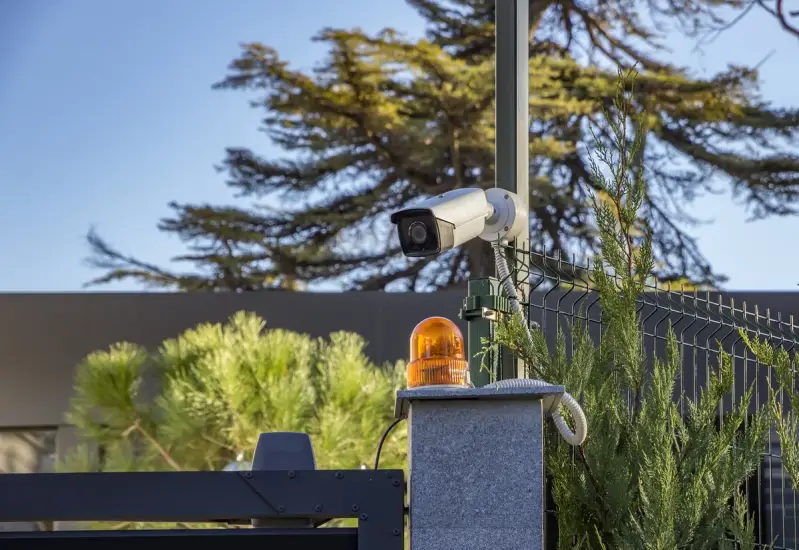
Modern security strategies increasingly rely on the convergence of multiple systems working together. Integrating your access control with CCTV creates a powerful combination where entry events trigger corresponding video recordings.
When a credential is presented, the system can direct nearby cameras to capture footage of the individual. If a door is forced or an invalid credential is used repeatedly, the system can alert security personnel and record the incident automatically. This integration creates a complete audit trail that is invaluable for incident investigation and compliance purposes.
For this integration to work effectively, your network infrastructure must support the bandwidth requirements of both access control data and video streams. High-definition CCTV footage consumes significant network capacity, and without proper planning, can interfere with access control communications. A well-designed structured cabling system separates security traffic from general office data, ensuring both perform optimally. Professional network cabling services can design a network that accommodates both your current needs and future expansion.
Choosing the Right Provider
Selecting a trustworthy provider is nearly as important as choosing the technology itself. A reliable partner ensures your system is installed correctly, configured properly, and supported over its lifetime.
Look for providers who offer comprehensive solutions rather than just selling hardware. A good provider will conduct a thorough site survey, assess your existing infrastructure, and design a system that meets your specific requirements. They should also handle compliance with local regulations, including building management approvals and data protection requirements under the PDPA.
Service agreements should be clear about what is included: installation, cabling, configuration, training, and ongoing maintenance. Understanding these details upfront prevents surprises later. Local support capabilities are also essential. When issues arise, having responsive assistance minimises downtime and maintains security continuity.
Providers with experience in network cabling Singapore understand the local regulatory landscape and the practical challenges of installing systems in Singapore's unique building environment. They can navigate approvals with building management, ensure compliance with fire safety codes, and recommend appropriate cabling standards for your specific situation.
Five Frequently Asked Questions
1. What factors should I consider when assessing my property's security needs?
Start by identifying the number of access points, any restricted areas requiring higher protection, and whether you need round-the-clock monitoring. Consider integration with existing systems and whether your access management needs to accommodate remote oversight. Also evaluate compliance requirements under Singapore's PDPA if biometric data will be collected.
2. Which type of access control system is most secure?
Biometric systems offer the highest level of security because they verify the actual individual rather than a token or code. However, the most secure approach often combines multiple authentication methods, such as a card paired with a PIN or fingerprint, for critical areas. Consider your specific risk profile when making this decision.
3. Why is structured cabling important for access control systems?
Structured cabling provides a standardised, organised framework for data transmission that reduces signal interference and simplifies maintenance. It ensures that authentication data travels quickly and reliably between readers, controllers, and servers, which is essential for real-time access verification.
4. Can I upgrade or expand my access control system later?
Yes, if you choose a scalable system from the start. Look for systems that support adding new users, access points, or integration with other building management tools without requiring a complete overhaul. This is where working with a provider who understands network cabling Singapore standards becomes valuable.
5. What should I look for in a provider?
Look for providers who offer comprehensive solutions including site survey, design, installation, and ongoing support. They should understand local regulations, provide clear service agreements, and offer responsive local support. Experience with network cabling Singapore and knowledge of PDPA compliance are particularly valuable.
Read another Article: The Ultimate Entry System Setup Guide
Create Your Own Website With Webador