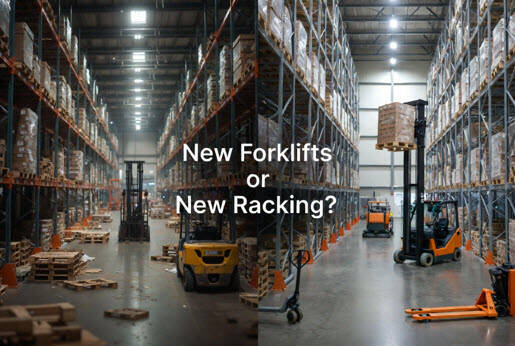
When warehouse operations begin to slow, the pressure to act quickly can lead to hasty decisions. Some managers rush to order new forklifts, believing that faster equipment will solve all their problems. Others immediately expand their storage racks, assuming that more space is the answer. In reality, both approaches can miss the mark if the underlying cause of inefficiency is not properly diagnosed.
This article provides a structured framework for evaluating whether your warehouse needs new forklifts, new racking, or a carefully balanced combination of both. By examining operational data, compliance obligations, and long-term cost implications, you can make a confident decision that delivers lasting improvements. The goal is not to guess but to analyse, ensuring that every dollar invested contributes to measurable gains in productivity and safety.
Key Takeaways:
- Start with a comprehensive operational audit before making any major purchase.
- New racking may require different trucks; compatibility is essential for efficiency.
- Operator competence is critical; accredited forklift training ensures safe and productive use of equipment.
- Floor maintenance, including regular cleaning, protects both trucks and racking.
- Used equipment can offer value but must be thoroughly inspected for safety and compliance.
Understanding the Root Cause of Inefficiency
Before committing to a significant capital expenditure, it is essential to understand precisely what is causing your warehouse to underperform. Many facility managers assume that slow operations are due to outdated forklifts, but this is not always the case. A well-maintained but poorly deployed fleet can be just as ineffective as an ageing one. Similarly, insufficient racking capacity can create bottlenecks that no amount of new trucks can resolve.
To identify the real issue, observe your warehouse during peak activity periods. Look for patterns: where do trucks queue? Where do goods accumulate? If your operators spend more time waiting for racking positions than actually moving loads, the problem is likely storage-related. On the other hand, if trucks are constantly in motion but struggling to meet demand, your fleet may be underpowered or in need of replacement. This diagnostic approach, rather than guesswork, provides the foundation for a sound investment decision.
The Interconnected Nature of Trucks and Racks
One of the most frequent mistakes in warehouse planning is treating forklifts and racking as independent purchases. In practice, they are closely interconnected, and changing one without considering the other often creates new problems. For example, installing narrow-aisle racking to increase storage density may render your existing counterbalance trucks unusable, as they are too wide to navigate the reduced space.
Conversely, investing in a fleet of modern reach trucks without assessing your racking layout can lead to inefficiencies. If your racking does not take full advantage of the trucks' lift height or turning capabilities, you are not realising the full value of your investment. This is why leading suppliers in Singapore advocate for integrated solutions, where every element of the warehouse is designed to work in harmony. Proper forklift training also plays a vital role here; operators who understand the capabilities and limitations of their equipment can adapt more effectively to changes in the warehouse layout.
Compliance and the Role of Operator Competence
Singapore's regulatory environment places significant emphasis on workplace safety, particularly in industries that use heavy machinery. The Ministry of Manpower requires that all forklift operators hold valid certifications, and these must be renewed periodically. However, compliance goes beyond simply holding a licence; operators must be competent in the specific conditions of your warehouse.
When you introduce new racking or different types of trucks, you may need to provide additional instruction to ensure your team can work safely and efficiently. Accredited forklift training programmes cover essential topics such as load stability, visibility management, and emergency response. They also address the practical skills needed to operate in confined spaces or at extreme heights. Investing in forklift training is not just a regulatory obligation; it is a practical measure that reduces accident risks, minimises damage to equipment, and improves overall productivity. A well-trained operator can make even older equipment perform effectively, while an untrained operator can render the newest forklift a liability.
When New Racking Is the Right Choice
If your warehouse is overcrowded but your aisles remain wide, additional racking is likely the most effective solution. High-density systems such as drive-in racking, double-deep configurations, or push-back systems can dramatically increase your storage capacity without the need for a building extension. These solutions are particularly valuable in Singapore, where floor space is at a premium and rental costs continue to rise.
However, high-density racking comes with its own set of requirements. Narrower aisles may necessitate specialised trucks, such as reach trucks or very narrow aisle models. Your operators will also need specific skills to navigate these tighter spaces safely. This is where forklift training becomes especially important; operators must learn new techniques for manoeuvring in confined areas and positioning loads accurately. Additionally, the condition of your warehouse floor becomes more critical in high-density configurations. Regular cleaning with scrubbing machines helps maintain a safe surface, reducing wear on truck wheels and preventing damage to racking anchors. A comprehensive approach that includes equipment, training, and maintenance will maximise the return on your investment.
When New Forklifts Are the Right Choice
If your storage layout is adequate but your throughput is suffering, the problem may lie with your fleet. Aged forklifts are prone to breakdowns, and obsolete models can be difficult to maintain due to limited spare parts availability. Upgrading to modern electric forklifts offers several advantages, including faster travel speeds, lower maintenance requirements, and zero emissions. For indoor warehouses, the elimination of exhaust fumes creates a healthier environment for workers.
Beyond the primary forklifts, consider your ancillary equipment. If staff are manually moving pallets across the warehouse, they are wasting time and risking injury. Introducing a powered pallet truck allows a single worker to transport heavy loads quickly and safely, freeing up larger trucks for stacking tasks. Modern models feature lithium-ion batteries that support opportunity charging, enabling continuous operation during busy shifts. When evaluating new forklifts, factor in the total cost of ownership, including energy consumption, maintenance intervals, and the availability of after-sales support. Proper forklift training ensures that your team can operate these new machines safely and efficiently from day one.
The Critical Role of Floor Maintenance
One aspect of warehouse operations that is frequently overlooked is the condition of the floor. High-density racking systems place significant loads on concrete surfaces, and uneven or damaged floors can compromise the stability of the entire structure. Similarly, electric pallet trucks and powered pallet trucks require smooth surfaces to operate efficiently; debris or cracks can damage wheels and cause load instability.
Regular maintenance of the warehouse floor is essential for protecting your investment in both racking and forklifts. Scrubbing machines remove dust, oil, and other contaminants that accumulate during daily operations. A clean floor allows trucks to travel at optimal speeds, reduces tyre wear, and prevents build-up that could corrode racking anchors. While this may seem like a minor detail, it contributes significantly to the longevity of your equipment and the safety of your workforce. Incorporating floor maintenance into your facility management routine is a small investment that delivers substantial returns over time.
Weighing New versus Used Equipment
Budget constraints often lead warehouse managers to consider used equipment as an alternative to new purchases. The market for pre-owned forklifts and racking is active in Singapore, and a well-maintained used reach truck can offer excellent value. However, caution is essential. Used equipment must be thoroughly inspected to ensure it meets current safety standards and is compatible with your operational requirements.
When evaluating a used reach truck for sale in Singapore, request a complete service history and verify that it has passed its annual Thorough Examination. For racking, second-hand steel must be checked for weld integrity and structural soundness; damaged components can pose serious safety risks. Also consider the availability of spare parts for older models, as delays in repairs can negate any initial cost savings. If you opt for used equipment, ensure that your team receives appropriate forklift training to familiarise themselves with any differences in handling characteristics compared to newer models. Weigh the upfront savings against the potential for higher maintenance costs and shorter remaining lifespan.
5 Frequently Asked Questions
-
How can I determine whether my warehouse needs new forklifts or new racking?
Start with a detailed operational audit. Track where delays occur and what causes them. If trucks are waiting for storage space, consider racking. If trucks are slow or unreliable, consider new forklifts. -
What are the compliance requirements for forklift operators in Singapore?
All operators must hold valid MOM-recognised certifications. When you introduce new equipment or change your layout, additional forklift training may be required to ensure competence in the new environment. -
Can used equipment be a cost-effective solution?
Yes, but only if it is thoroughly inspected and meets current safety standards. Verify maintenance history and ensure spare parts are readily available. -
How does floor condition affect warehouse operations?
Poor floor condition damages truck wheels, destabilises racking, and increases accident risks. Regular cleaning with scrubbing machines is essential for safe and efficient operations. -
What is the most common mistake when upgrading a warehouse?
Upgrading forklifts or racking in isolation without considering their interdependency. Always evaluate both together and ensure your team receives appropriate forklift training for any changes.
Read another Article: Industrial Storage Racking and Fleet Efficiency Guide
Create Your Own Website With Webador