As we progress through 2026, Singapore maintains its definitive position as a premier business hub, serving as the preferred choice for the vast majority of regional commercial entities. The city-state’s world-class infrastructure and highly supportive regulatory environment provide a robust foundation for organisations managing complex supply chains across Southeast Asia. While maritime and aerial routes remain traditional favourites for global trade, the utilisation of a reliable cargo delivery service Singapore has emerged as a swift and adaptable method for transporting inventory across the southern peninsula. Establishing a thorough understanding of how these land-based networks operate is essential for any business leader looking to make wiser shipping decisions in a competitive market.
Choosing between different freight methods is a critical tactical decision that directly influences inventory replenishment cycles and overall supply chain resilience. This choice extends far beyond simple cost-per-kilometre calculations; it impacts the ability of an organisation to meet customer expectations and protect profit margins. A comprehensive strategy involves evaluating the fundamental mechanics and cost structures of each mode to clarify when land-based transport is the undisputed champion and when air speed is a necessary investment. By aligning daily operational needs with long-term commercial objectives, procurement specialists can build a logistics framework that is both cost-optimised and capable of handling diverse shipment requirements.
Key Takeaways:
- Road transit offers a balanced solution, typically requiring one to three days compared to air freight’s twenty-four to forty-eight-hour window.
- Land haulage operates on a cost-effective flat-rate-per-vehicle basis, while air costs are dictated by chargeable weight and volume.
- The unique direct border access for trucks in this corridor significantly reduces handling risks and transit damage.
- Accurate HS code classification and meticulous documentation are mandatory to avoid administrative delays at checkpoints.
- Shared truckload (LTL) services provide an economical path for smaller batches, while full truckloads (FTL) offer maximum schedule control.
Comparative Economics of Regional Transit Modes
When evaluating transit speed, road-based haulage typically remains only one day behind air freight, yet it offers a significant advantage over the slower timelines associated with shipping by sea. For businesses managing cargo to Malaysia, this mode provides a predictable window of one to three days, which is often sufficient for routine stock replenishment and retail distribution. The flexibility of land transport allows for daily departures and the ability to accommodate last-minute booking changes that are frequently impossible with fixed airline schedules. This adaptability ensures that the supply chain remains responsive to fluctuating market demands without incurring the extreme premiums of emergency air transport.
The financial decision-making process must account for the fundamental differences in how each mode calculates its charges. Air freight is the most expensive option because it is based on chargeable weight and volume, often leading to costs three to five times higher than road transport for similar items. In contrast, land-based solutions utilise a cost-effective flat rate per container or vehicle, making it the superior choice for moving palletised goods, machinery, or high-volume inventory. For many industrial exporters, identifying the best container trucking company in Singapore for cross-border freight rates is the most direct path to protecting profit margins and maintaining competitive pricing for their end customers.
The Direct Access Advantage at the Border
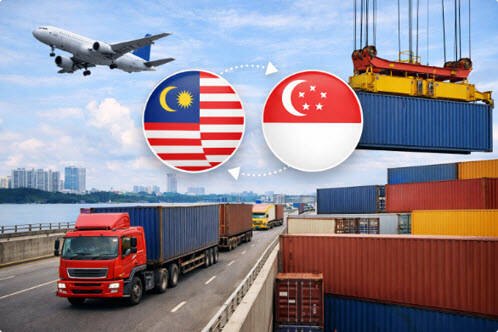
A unique and distinguishing element of the trucking corridor between Malaysia and Singapore is that vehicles from one country are permitted to move freely within the borders of the other. This stands in stark contrast to most other international borders, where products must be unloaded from one vehicle and reloaded onto another at the checkpoint. This direct movement allows for a seamless door-to-door cargo delivery service Singapore that is managed by a single team from the initial collection to final unloading. By removing the need for transhipment at the border, the logistics industry significantly reduces the complexity and the number of potential failure points in the journey.
This direct border access provides a critical benefit in terms of cargo safety and risk mitigation. Every time a shipment is handled or transferred between vehicles, the risk of physical damage or loss increases exponentially. By allowing a single lorry to traverse the entire route, the probability of handling damage is greatly diminished, which is particularly vital for delicate electronics or chemical-containing products. This efficiency not only protects the physical integrity of the goods but also prevents unnecessary administrative delays that often occur when multiple carriers are involved in a single shipment.
Compliance Frameworks and Customs Clearance
Customs clearance remains a pivotal aspect of cross-border haulage, requiring meticulous preparation before the vehicle reaches the checkpoint. At the Johor customs facility, Malaysian officials must approve a comprehensive set of documents, including commercial invoices, packing lists, and export permits, to grant initial clearance. Exporters are required to classify their inventory using the Harmonised System (HS) tariff codes, as specific duties and taxes may apply depending on the nature of the cargo Malaysia. Partnering with a professional broker ensures that these digital permits are accurate, preventing the detention of the vehicle and the subsequent accumulation of storage fees.
Upon entering Singapore, the shipment undergoes a second inspection where importers must present the necessary documentation for import clearance. It is important to note that road deliveries, unlike some air shipments, do not benefit from de minimis tax relief; consequently, a standard GST of 7 per cent and various duties are charged based on the product category. Business importers must register a Unique Entity Number (UEN) and maintain an active customs account to facilitate duty payments through the official GIRO system. Any inaccuracies or omissions at this stage can cause immediate delays, making administrative precision a top priority for any firm shipping from Singapore to Malaysia.
Service Configurations for Operational Efficiency
The logistics industry provides two primary shipment structures to accommodate varying commercial volumes: full truckload (FTL) and less-than-truckload (LTL). FTL offers a fixed price per container and is the most economical choice once a shipment fills more than twelve cubic metres or involves dedicated industrial machinery. Shippers choosing FTL benefit from dedicated security and the ability to control their own dispatch times rather than adhering to the rigid schedules of shared vehicles. This model ensures that the vehicle proceeds directly to its destination without additional sorting stops, providing the fastest possible road transit.
For businesses moving smaller quantities or regular batches, LTL services provide a cost-effective way to share vehicle space. In this model, the shipper pays only for the cubic metres or pallet positions occupied, with rates typically ranging from SGD 80 to 150 per cubic metre. While this option involves consolidation at a warehouse before the journey, it provides a flexible solution for maintaining lean inventory levels without the expense of a dedicated vehicle. To avoid unexpected expenses, managers should request a fast cargo delivery service Singapore container trucking cost breakdown that clearly lists any fuel surcharges, tolls, or ancillary fees like demurrage.
Building a Resilient Logistics Partnership
Selecting a logistics partner involves more than just comparing the lowest available rates; it requires finding a firm with established networks and proven reliability. Providers holding Authorised Economic Operator (AEO) status, such as Evermarch Logistics, offer significant advantages, including faster clearance times and reduced inspection rates at the border. These specialists deliver critical value by providing data-driven advice on mode selection, cost optimisation, and packaging specific to your industry. Their expertise in navigating cross border trucking Malaysia Singapore ensures that administrative risks are minimised and that transport capacity is always secured.
Modern technology has become a cornerstone of fleet management, providing the visibility needed for high-performance supply chains. Advanced partners offer real-time tracking portals and proactive notifications, giving businesses peace of mind through every stage of the B2B or B2C delivery process. Furthermore, these firms can consolidate smaller shipments into cost-effective full truckloads, passing on significant economies of scale to their clients. By leveraging these professional networks and digital tools, companies can build a logistics operation that is both transparent and capable of supporting long-term commercial growth.
FAQs
1. What is the average cost for a 20-foot container from Singapore to Kuala Lumpur? The average cost typically ranges from SGD 650 to 900, inclusive of the base rate, tolls, and basic customs clearance.
2. Does the quoted transport price include GST and Malaysian import duties? No, transport quotes exclude Goods and Services Tax (GST) and any import duties or taxes payable in Malaysia, which are billed separately by customs.
3. How can I secure a lower rate for regular regional cargo? Signing a monthly volume commitment or a long-term contract can lower per-trip costs by 10-15 per cent; consolidating multiple shipments into one container also reduces the per-unit cost.
4. What happens if my cargo is delayed at the border due to paperwork errors? Delays caused by customs inspections are usually not charged extra if beyond the carrier's control, but incorrect paperwork from the shipper may incur waiting time fees like demurrage.
5. Is insurance included in the standard container trucking price? Basic liability coverage is often included but at a low limit (e.g., SGD 5,000); for high-value cargo, it is highly recommended to purchase separate marine cargo insurance.
Read another Article: Best Container Trucking Company in Singapore Selection Guide
Create Your Own Website With Webador